The most energy-efficient television models on the market today often feature advanced display technologies like OLED and Mini-LED, which not only reduce power consumption but also enhance picture quality with superior contrast and vibrant colors. These modern TVs intelligently manage power by lighting only necessary screen areas, leading to significant energy savings and a more immersive viewing experience compared to older models. Choosing an energy-efficient TV means upgrading your entire viewing journey without sacrificing visual performance.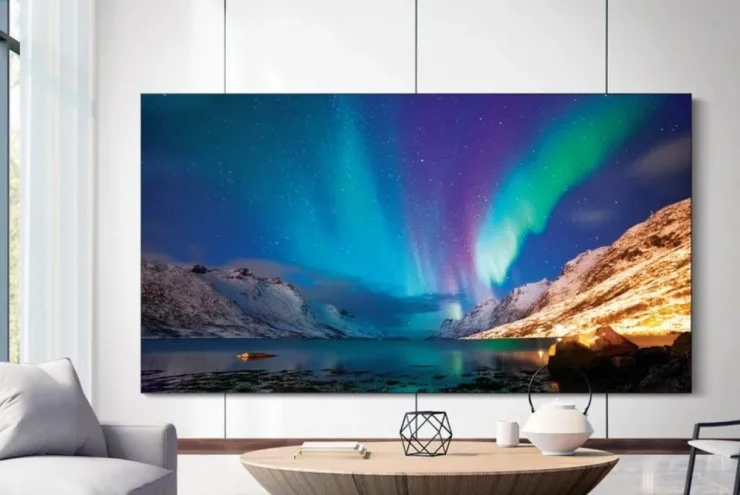
Why Should a True TV Fanatic Care About Energy Efficiency?
A true television enthusiast should care about energy efficiency because the very technologies that reduce power consumption, like OLED’s per-pixel lighting and Mini-LED’s precise local dimming, are the same ones that produce superior contrast, deeper blacks, and more vibrant colors, ultimately enhancing the artistic intent of what you’re watching.We invest hours, days, entire weekends into meticulously crafted worlds. The last thing we want is a washed-out picture or a distracting glow during a dark, tense scene in House of the Dragon. An energy-guzzling TV from a bygone era often struggled with this, using a single, always-on backlight that turned deep space into a murky gray. Modern, energy efficient television models have solved this problem. They use power intelligently, lighting up only the parts of the screen that need it. This isn’t just a technical win; it’s an artistic one. It means the void of space is truly a void, and the glint of a dragon’s eye is a pinprick of brilliant light against perfect darkness. You’re not just saving power; you’re preserving the director’s vision.
The Tech Behind the Magic: A TV Lover’s Glossary
To really get what makes these TVs tick, you don’t need an engineering degree. You just need to understand the fundamental difference in how they create light. Let’s cut through the marketing noise. For best televisions roundups on this site.
OLED: The Film Noir of TV Tech
OLED (Organic Light Emitting Diode) is the purist’s choice, and for good reason. Each individual pixel is its own light source. When a scene calls for black, the pixel simply turns off. Completely.
- The Benefit: This creates what we call “infinite contrast.” The difference between the brightest bright and the darkest dark is, well, infinite.
- The Experience: Remember the shadowy, neo-noir aesthetic of Blade Runner 2049? Or the stark, terrifying darkness of The Haunting of Hill House? On an OLED, those scenes are rendered with a depth and authenticity that’s simply breathtaking. Because it’s not faking black, it is black. This pixel-level control also makes it inherently one of the most efficient TV technology options for dark content.
QLED & Mini-LED: The Blockbuster Spectacle
|
Our Picks for the Best Television in 2026
As an Amazon Associate, we earn from qualifying purchases.
|
||
| Num | Product | Action |
|---|---|---|
| 1 | Electric Spin Scrubber - Cordless Cleaning Brush with Digital Display, 2 Speeds, 8 Brush Heads, IPX7 Waterproof, Adjustable Long Handle for Bathroom, Tub, Tile, Shower, and Car |

|
Don’t count out the competition. QLED and its more advanced cousin, Mini-LED, are part of the LCD family, but they’ve evolved dramatically. Instead of a single backlight, they use an array of LEDs behind the pixel layer. Mini-LED, as the name suggests, uses thousands of tiny LEDs.
- The Benefit: These TVs can get incredibly bright. This makes them powerhouses for HDR (High Dynamic Range) content and perfect for watching TV in a sunlit room.
- The Experience: Think of the explosive, vibrant colors in a show like Our Planet. The sheer brightness of a QLED or Mini-LED makes those scenes pop with unbelievable intensity. The “local dimming” technology, where zones of those Mini-LEDs can be dimmed or turned off, has gotten so precise that it’s closing the gap on OLED’s black levels, all while maintaining its advantage in peak brightness and reducing overall power consumption compared to older LCDs.
As television critic Elena Vance puts it, “OLED gives you the perfect black of a theater, while a premium Mini-LED gives you the dazzling brightness of a summer blockbuster. The best energy efficient television models let you choose which cinematic experience you want to live in.”
Our Top Picks: The Best Energy Efficient Television Models
Alright, you’ve got the theory. Let’s talk hardware. Picking the “best” TV is subjective, like picking the best season of The Wire (it’s season 4, and I’ll take no arguments). It depends on your room, your viewing habits, and your budget.
For the Cinematic Purist: The OLED Masterpiece
If you have a dedicated viewing room or primarily watch in the evenings, an OLED is your canvas. Models from LG’s C-series and G-series or Sony’s A-series consistently deliver reference-level picture quality. They excel at showcasing the subtle shadow detail and rich color palettes that define prestige television. Their low power consumption during dark scenes is a fantastic bonus.
- Best for watching: Better Call Saul, The Crown, True Detective
- Key Feature: Perfect blacks and infinite contrast.
For the Bright Room Binger: The Mini-LED Powerhouse
If your living room is a sun trap and you do a lot of daytime viewing, a high-end Mini-LED QLED is your champion. Samsung’s Neo QLED and TCL’s 6-Series are brilliant examples. They have the brightness to combat glare and deliver stunning HDR highlights that will make you squint—in a good way. Their energy efficiency comes from the precise control of those thousands of dimming zones.
- Best for watching: Live sports, nature documentaries like Planet Earth III, vibrant animated series.
- Key Feature: Exceptional peak brightness and glare resistance.
For the Savvy Streamer: The Mid-Range Marvel
You don’t need to spend a fortune to get a great, energy-saving TV. Brands like Hisense and Vizio are producing TVs with features like full-array local dimming that were exclusive to high-end models just a few years ago. Look for the Energy Star label and you’ll find a low power consumption TV that still delivers a fantastic 4K HDR experience for your Netflix and Max binges.
- Best for watching: Stranger Things, The Marvelous Mrs. Maisel, your favorite sitcoms.
- Key Feature: Excellent value without major compromises on picture quality or efficiency.
How to Spot an Energy Efficient TV in the Wild?
When you’re shopping, look for the Energy Star logo. This is a certification from the U.S. Environmental Protection Agency. A TV with this label is certified to be significantly more energy-efficient than a standard model, both when it’s on and in standby mode. You can often find specific power consumption data (measured in kWh/1000h) on the energy label in stores or online spec sheets.
Beyond the Screen: Simple Tweaks for a Greener Binge
Owning one of the best energy efficient television models is step one. But you can do more.
- Adjust the Brightness: Most TVs are set to “torch mode” out of the box. Switching to a “Cinema” or “Filmmaker” picture mode not only provides a more accurate picture but also significantly lowers brightness and power usage.
- Turn Off Motion Smoothing: Often called “Auto Motion Plus” or “TruMotion,” this feature (the “soap opera effect”) interpolates frames, which requires extra processing power. Turning it off saves energy and is preferred by most filmmakers.
- Use the Sleep Timer: If you’re prone to falling asleep during a re-watch of The Office, the sleep timer is your best friend.
- Disable Quick Start: Many TVs have a “quick start” or “instant on” feature that keeps them in a higher-power standby mode. Disabling it means a few extra seconds to boot up, but less vampire power drain overnight.
Frequently Asked Questions
Are OLED TVs more energy efficient than LED TVs?Generally, yes, especially when viewing content with a lot of dark or black scenes. Because OLED pixels turn off completely to create black, they use virtually no power in those areas, whereas an LED TV’s backlight is always on to some degree.Does a 4K TV use more energy than a 1080p TV?All else being equal, a 4K TV often uses slightly more energy because it has four times the pixels to power and process. However, modern 4K energy efficient television models with newer technologies like Mini-LED are often more efficient than older, less advanced 1080p TVs.What is the most important factor for TV energy consumption?Screen brightness is by far the biggest factor. Lowering the backlight or brightness setting on any TV will have the most immediate and significant impact on its power consumption.Does screen size affect how much energy a TV uses?Absolutely. A larger screen has more surface area to light up, so a 75-inch TV will naturally consume more power than a 55-inch TV of the same model line, even with the same settings.What does the Energy Star rating actually mean for a television?The Energy Star rating means the television meets strict energy efficiency guidelines set by the EPA. It must consume less power than conventional models both while in use and in standby mode, saving you money and reducing greenhouse gas emissions over its lifetime.
In the end, choosing one of the top energy efficient television models is a powerful statement. It says you care not just about the stories on the screen, but about the technology that brings them to life in the most authentic and responsible way possible. It’s a choice that elevates your viewing from simple consumption to true appreciation. Now, if you’ll excuse me, the final season of Dark is calling, and my OLED is ready to render its beautiful, terrifying blackness with perfect efficiency. What will you be watching on yours?
Frequently Asked Questions
Are OLED TVs more energy efficient than LED TVs?
Generally, yes, OLED TVs are more energy efficient than LED TVs, especially when displaying content with dark or black scenes. This is because individual OLED pixels can turn off completely, consuming virtually no power in those areas, unlike LED TVs where the backlight remains on to some degree.
Does a 4K TV use more energy than a 1080p TV?
All else being equal, a 4K TV typically uses slightly more energy than a 1080p TV due to having four times the pixels to power and process. However, many modern 4K energy efficient television models, especially those with newer technologies like Mini-LED, can be more efficient than older, less advanced 1080p TVs.
What is the most important factor for TV energy consumption?
Screen brightness is the most significant factor influencing a TV's energy consumption. Lowering the backlight or brightness setting on any television will have the most immediate and substantial impact on its power usage, potentially reducing it by a notable percentage.
Does screen size affect how much energy a TV uses?
Absolutely, screen size directly affects how much energy a TV consumes. A larger screen, such as a 75-inch model, requires more power to illuminate its greater surface area compared to a smaller 55-inch TV from the same product line, even when using identical settings.
What does the Energy Star rating actually mean for a television?
The Energy Star rating signifies that a television meets strict energy efficiency guidelines established by the U.S. Environmental Protection Agency (EPA). This certification ensures the TV consumes less power than conventional models during both active use and standby modes, leading to savings on electricity bills and reduced greenhouse gas emissions over its lifespan.
Get our weekly buyer guide
Practical specs, not advice. Unsubscribe anytime.
I got a new energy-efficient TV hoping to see a big drop in my power bill, but honestly, it hasn’t been as dramatic as I expected. The picture is good, and I do appreciate the vibrant colors, but the energy savings seem pretty minimal for my usage. Maybe it’s just my specific model, but I was hoping for more significant results.
I picked up one of the Mini-LED models mentioned, and I’m pretty impressed. The local dimming really makes a difference with contrast, and colors pop. My old TV used to heat up the room, but this one stays much cooler, which is a nice bonus. I only wish the sound quality was a bit better directly from the TV, but that’s easily fixed with a soundbar.
My old TV was a power hog, and I was looking for something that wouldn’t make me feel guilty leaving it on for a movie marathon. The information about per-pixel lighting in OLEDs really sold me. It’s amazing how clear and bright the picture is while still being so efficient. I’m really happy with my purchase and the peace of mind it brings.
I was really on the fence about upgrading to an OLED because of the price, but after reading about how much energy they save, I decided to go for it. The picture quality is absolutely stunning, especially the deep blacks. It’s great to know I’m getting a premium viewing experience without racking up a huge electricity bill. Definitely worth the investment for the long run.