Let’s be honest. We’ve all been there. You’re watching a pivotal scene—the dragons in House of the Dragon breathing fire across a darkened sky, or the breathtaking expanse of Arrakis in Dune—and something just feels… off. The blacks are a bit grey, the colors don’t quite pop, the motion seems blurry. The quest for the Best Tv Picture Quality isn’t just about specs on a box; it’s about chasing an experience. It’s about feeling the director’s vision exactly as they intended. So, what really separates a good screen from a truly transcendent one? Is it all marketing jargon, or are there real, tangible differences that can transform your living room into a cinematic haven? Buckle up, because we’re about to demystify it all.
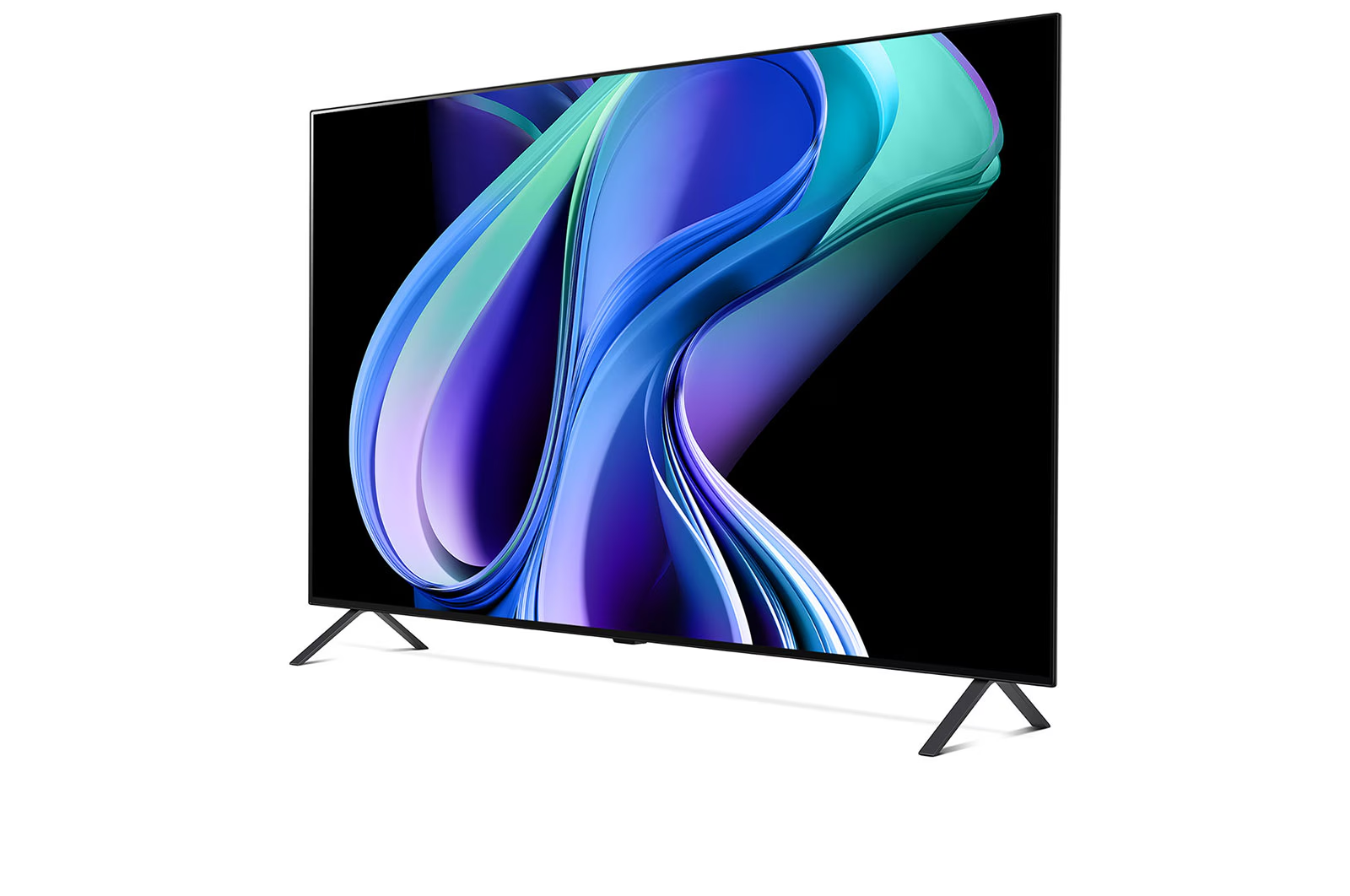
What Actually Defines the Best TV Picture Quality?
Before we dive into the tech wars, we need to speak the same language. The best tv picture quality isn’t determined by a single factor but is a delicate symphony of different elements working in harmony. Get these right, and you’re in for a visual treat.
- Contrast Ratio: This is arguably the most critical element. It’s the difference between the deepest black and the brightest white a screen can produce. A high contrast ratio means inky, true blacks next to brilliant highlights, creating depth and a sense of realism. Think of the void of space in Gravity—it should be pitch black, not a cloudy dark grey.
- Color Accuracy and Volume: Accuracy is how true-to-life the colors are, while volume is the range of colors a TV can display at various brightness levels. You want the vibrant costumes in Bridgerton to look rich and nuanced, not oversaturated and cartoonish.
- Resolution: This is the one we all know—the number of pixels on the screen. While 4K is the current standard and offers incredible detail, the quality of those pixels (driven by contrast and color) is far more important than just the quantity.
- Peak Brightness: Measured in “nits,” this is how bright your screen can get. High peak brightness is crucial for High Dynamic Range (HDR) content, making explosions feel hotter and sunlight look more dazzling.
- Motion Handling: This refers to how well a TV handles fast-moving scenes without blurring or juddering. For sports fans or action movie buffs, this is non-negotiable.
The Great Tech Debate: OLED vs. QLED (and Mini-LED)
This is the main event, the heavyweight championship for your eyeballs. Understanding the fundamental difference here is the key to unlocking the best tv picture quality for your specific needs.
Why OLED Reigns for Cinema Lovers
OLED stands for Organic Light Emitting Diode. The key takeaway here is that each individual pixel creates its own light. When a pixel needs to be black, it simply turns off. Completely.
“There is no ‘dark gray’ on an OLED. There is only a perfect, infinite black. This per-pixel control is what gives OLED its cinematic soul, allowing for a level of precision and contrast that is simply breathtaking in a dark room setting.” – Dr. Alistair Finch, Television Historian
This results in what we call an “infinite contrast ratio.” I’ll never forget the first time I watched the “Battle of Winterfell” from Game of Thrones on a high-end OLED. In a dimly lit room, the screen just melted away, leaving only the flickering torches, the glint of steel, and the terrifying darkness. That’s the OLED magic.
- Pros: Perfect black levels, infinite contrast, phenomenal viewing angles, incredibly slim design.
- Cons: Can be susceptible to “burn-in” with static images (though modern tech has greatly reduced this risk), and generally not as bright as their QLED counterparts.
The Case for QLED and Mini-LED: Bright Room Brilliance
QLED (Quantum Dot Light Emitting Diode) is a different beast. It’s still an LCD TV at its core, meaning it uses an LED backlight that shines through a panel of pixels. The “Quantum Dot” part is a special film that enhances color and brightness.
Think of it this way: if OLED is a master of shadows, QLED is a champion of light.
Modern high-end QLEDs now use Mini-LED backlights. Instead of a few dozen large LEDs, they use thousands of tiny ones. This gives them much finer control over which parts of the screen are bright and which are dark, dramatically improving contrast and getting them much closer to OLED’s performance, but with one major advantage: searing brightness.
If your TV lives in a bright, sun-drenched living room, a QLED or Mini-LED TV is your best friend. Watching a vibrant nature documentary like Planet Earth III on a top-tier QLED is an experience. The brilliant plumage of a tropical bird or the sun reflecting off the ocean will have an intensity that OLEDs struggle to match.
|
Our Picks for the Best Television in 2026
As an Amazon Associate, we earn from qualifying purchases.
|
||
| Num | Product | Action |
|---|---|---|
| 1 | Electric Spin Scrubber - Cordless Cleaning Brush with Digital Display, 2 Speeds, 8 Brush Heads, IPX7 Waterproof, Adjustable Long Handle for Bathroom, Tub, Tile, Shower, and Car |

|
- Pros: Extremely high peak brightness, fantastic color volume, no risk of burn-in, often more affordable at larger sizes.
- Cons: Blacks aren’t as perfect as OLED (you can sometimes see a slight “halo” effect around bright objects on a black background), and viewing angles can be more limited.
Beyond the Buzzwords: Decoding the Specs That Matter
So you’ve chosen your team—OLED or QLED. Now what? Let’s quickly translate the marketing speak you’ll see on the box into what it actually means for your viewing pleasure.
How Important is 4K vs. 8K Resolution?
For 99% of people, 4K (Ultra HD) is the absolute sweet spot. It provides a sharp, detailed image that is a significant upgrade from 1080p. 8K TVs are on the market, but there’s very little native 8K content to watch. The TV has to “upscale” 4K content, and while the technology is impressive, the real-world benefit for the best tv picture quality is minimal for most screen sizes. Save your money and invest in a better 4K TV rather than a mediocre 8K one.
The Magic of HDR: Dolby Vision vs. HDR10+
High Dynamic Range (HDR) is a bigger leap in picture quality than the jump from 1080p to 4K was. It expands the range of both color and contrast, allowing for brighter highlights, deeper blacks, and more nuanced colors in between.
- HDR10: The base standard. It’s good, but it uses static metadata, meaning it sets the brightness and color levels for the entire movie at once.
- Dolby Vision & HDR10+: These are the premium formats. They use dynamic metadata, allowing them to adjust the picture scene-by-scene or even frame-by-frame. This gives the filmmaker incredible control to optimize the picture. Dolby Vision is currently more widely supported by streaming services like Netflix, making it a powerful feature to look for.
Don’t Forget the Brains: Processing and Motion
A TV’s processor is its brain. A powerful processor can dramatically improve picture quality by reducing noise, enhancing detail (upscaling), and smoothing out motion. A cheap TV might have a great panel, but if its processor is weak, the picture will suffer.
When it comes to motion, look for a “native refresh rate” of 120Hz if you’re a gamer or watch a lot of fast-paced sports. This allows for smoother, clearer motion. Just be sure to turn off that dreaded “motion smoothing” (often called “TruMotion” or “Motionflow”), which creates the “soap opera effect” and ruins the cinematic feel of movies.
How Do You Find the TV with the Best Picture Quality for You?
The absolute best tv picture quality is not a one-size-fits-all answer. It’s deeply personal. Here’s how to choose:
- Consider Your Viewing Environment: Do you have a dedicated, dark home theater room? Go for OLED. Do you watch mostly during the day in a bright living room with lots of windows? A high-end QLED with Mini-LED is your best bet.
- Know Your Content: Are you a cinephile who watches movies on Netflix and Blu-ray every night? The contrast and perfect blacks of OLED were made for you. Are you a sports fanatic, a hardcore gamer, or someone who primarily watches daytime TV? The brightness and responsiveness of a 120Hz QLED will likely serve you better.
- Set Your Budget (Realistically): The top-tier models from brands like LG, Sony, and Samsung will always deliver the best performance, but you don’t have to spend a fortune. Mid-range models from brands like TCL and Hisense now offer technologies like Mini-LED and QLED at incredibly competitive prices.
Frequently Asked Questions
What is the single most important factor for picture quality?
Contrast ratio. The ability to produce deep, inky blacks is the foundation upon which all other aspects of a great picture are built. It creates depth, makes colors pop, and delivers that truly cinematic, immersive feeling.
Is a more expensive TV always better?
Not necessarily. While flagship models carry a premium for the latest technology and best performance, the law of diminishing returns is very real. Often, a “step-down” model from a premium brand offers 90% of the performance for a fraction of the price.
Do I need to calibrate my new TV for the best tv picture quality?
For most users, no. Modern TVs are incredibly accurate right out of the box, especially when you select the “Filmmaker Mode” or “Cinema” picture preset. These modes are designed to show you the content as the creator intended, disabling unnecessary processing.
Which brand has the best TV picture quality?
There is no single “best” brand. LG is the pioneer and leader in OLED technology. Samsung is the champion of QLED and brightness. Sony is renowned for its incredible processing, which can elevate both OLED and LED panels. The best brand for you depends on your priorities.
How long should a high-quality TV last?
A good quality TV from a reputable brand should easily last you 7-10 years. The panel technology is very durable, and by the time it begins to degrade, you’ll likely be ready for the next wave of technology anyway.
The Final Frame
The pursuit of the best tv picture quality is a journey, not a destination. It’s about understanding the core principles of what makes an image come alive and matching that technology to your home, your habits, and your passions. Whether you choose the infinite, cinematic contrast of an OLED or the dazzling, bright-room brilliance of a QLED, you’re investing in more than just a screen. You’re investing in countless nights of immersion, discovery, and the pure joy of seeing stories told in their most beautiful and impactful form. Now, go find your perfect window to another world. What will you be watching first?