Let’s be honest, we’ve all been there. It’s a beautiful, sunny afternoon. The light is pouring into your living room, which sounds lovely until you try to watch the latest episode of House of the Dragon. Suddenly, that epic dragon battle looks less like a fiery spectacle and more like a vague, murky shadow fighting your own reflection. Finding the Best Tv For Bright Rooms is a modern-day quest, a battle against the ultimate final boss: the sun. It’s not just about cranking up the brightness; it’s about smart technology designed to win the war against glare and washed-out colors.
So, how do you pick a screen that can stand up to that big ball of fire in the sky? Forget everything you think you know about TV shopping. We’re about to dive deep into the tech that truly matters, so you can enjoy a stunning, vibrant picture, no matter what time of day it is. Trust me, by the end of this, you’ll be an expert.
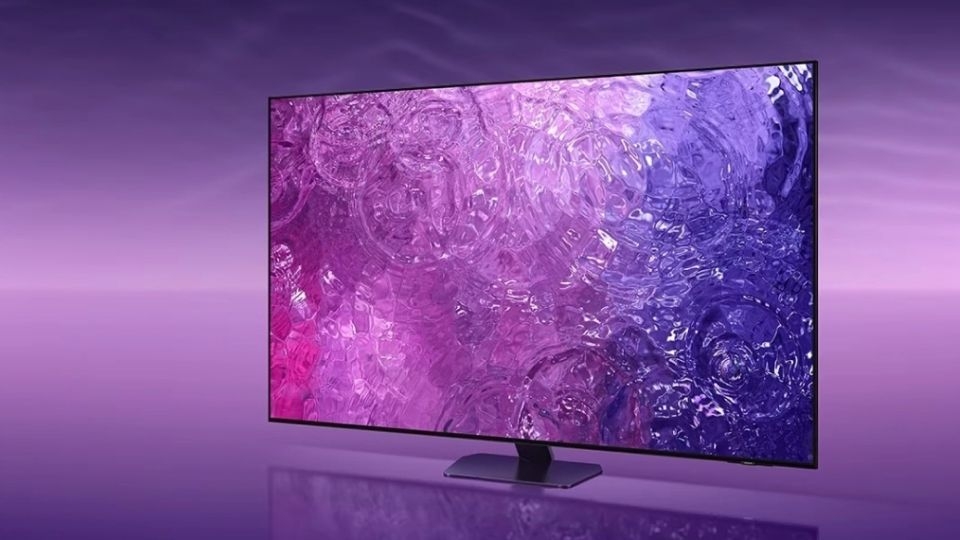
Why Your TV Looks Washed Out in a Bright Room
Before we anoint a champion, we need to understand the enemy. There are two main culprits responsible for your daytime viewing woes: ambient light and reflections. Ambient light from windows and lamps floods your screen, competing with the light your TV produces. This effectively “raises the black levels,” making dark scenes look grey and colors appear faded. Reflections are even more straightforward—they’re literally the outside world plastering itself over your screen, turning your TV into an expensive, semi-functional mirror.
A standard TV just can’t produce enough light to overpower this interference. It’s like trying to have a whispered conversation in the middle of a rock concert. The best tv for bright rooms needs to not only shout louder than the ambient light but also wear noise-canceling headphones to block out the reflections.
The Secret Weapon: What Makes the Best TV for Bright Rooms?
So, what’s the secret sauce? It boils down to a tag team of two critical features: sheer, unadulterated brightness and sophisticated anti-reflection technology. Let’s break down the specs you need to look for.
Peak Brightness: Fighting Fire with Fire (or Light with Light)
This is your TV’s raw power, measured in a unit called “nits.” Think of it like the wattage of a light bulb. A higher nit count means the TV can get physically brighter, allowing its picture to cut through the ambient light in your room.
- Below 500 nits: This is standard for many budget TVs. In a dark room, it’s perfectly fine. In a bright room, it’s a recipe for a washed-out, disappointing image.
- 700-1000 nits: Now we’re talking. This is the entry-level for a good bright-room experience. You’ll notice a significant improvement in color vibrancy and contrast during the day.
- 1500+ nits: This is the big league. TVs that can hit these numbers, especially in small highlights (what we call peak brightness), can produce dazzling HDR content that looks spectacular even with sunlight streaming in.
As television analyst Dr. Alistair Finch notes, “Peak brightness is the brute force solution. It allows the highlights of an image—the sun glinting off a sword in The Witcher, for example—to pop with realistic intensity, even when the viewing environment is far from ideal.”
Anti-Glare and Reflection Handling: The Unsung Hero
Brightness is only half the story. If your screen is a perfect mirror, even 2000 nits of brightness won’t stop you from seeing your own couch reflected in a character’s face. This is where screen finishing comes in. Manufacturers use special filters and screen layers to diffuse and absorb incoming light.
- Glossy Screens: Often found on OLED TVs, these screens can produce incredible contrast in dark rooms, but they act like black mirrors in bright ones, showing sharp, distracting reflections.
- Matte/Semi-Gloss Screens: Common on high-end QLED and Mini-LED TVs, these screens scatter reflections, making them less distinct and far less distracting. The trade-off can sometimes be a slight reduction in perceived black-level depth, but for a bright room, it’s a trade worth making every single time.
|
Our Picks for the Best Television in 2026
As an Amazon Associate, we earn from qualifying purchases.
|
||
| Num | Product | Action |
|---|---|---|
| 1 | Electric Spin Scrubber - Cordless Cleaning Brush with Digital Display, 2 Speeds, 8 Brush Heads, IPX7 Waterproof, Adjustable Long Handle for Bathroom, Tub, Tile, Shower, and Car |

|
The Contenders: QLED vs. OLED in the Arena of Light
The TV world is dominated by two main panel technologies: QLED (and its more advanced Mini-LED variants) and OLED. For years, the conventional wisdom was simple: OLED for dark rooms, QLED for bright rooms. But things are changing.
| Feature | QLED / Mini-LED | OLED |
|---|---|---|
| Peak Brightness | Winner. Can get significantly brighter, easily pushing past 1500-2000 nits. | Good, but generally tops out around 1000-1300 nits on the latest models. |
| Black Levels | Very good, but can have minor “blooming” (light halos) around bright objects. | Winner. Perfect, infinite blacks because each pixel turns off completely. |
| Reflection Handling | Winner. Typically have superior anti-glare filters and matte finishes. | Improving, but still more prone to mirror-like reflections due to their glossy screens. |
| Bright Room Verdict | The historical and current champion for most sun-drenched living rooms. | A viable contender now thanks to new tech like MLA, but still bested by top-tier QLEDs. |
Think back to the infamous Game of Thrones episode, “The Long Night.” On an OLED in a dark room, it was a masterpiece of subtle, shadowy detail. On a QLED in a bright room, you could actually see what was happening. That’s the fundamental difference. The best tv for bright rooms is almost always going to be a high-end QLED or Mini-LED model.
Our Top Picks for the Best TV for Bright Rooms in 2024
Ready to make a choice? Here are the models that are currently leading the charge in the fight against glare.
- The Undisputed King of Brightness: Samsung QN90C/QN95C Neo QLED
This is the gold standard. It combines Mini-LED backlighting with Quantum Dot technology to get incredibly bright, delivering a punchy, vibrant image that laughs in the face of sunlight. Its anti-reflection screen is also arguably the best in the business. - The Premium Performer: Sony X93L/X95L Mini LED
Sony brings its legendary picture processing to the Mini-LED game. While it might not hit the absolute searing peaks of the Samsung, its control over the backlight is more nuanced, leading to less blooming and an incredibly refined, natural-looking picture in any lighting condition. - The High-Value Contender: Hisense U8K / TCL QM8
Don’t sleep on these brands. Hisense and TCL are delivering Mini-LED TVs with brightness levels that rival—and sometimes exceed—the big names, but at a much more aggressive price point. The reflection handling might be a small step down, but the value for money is simply off the charts.
Frequently Asked Questions (FAQ)
What is the best type of TV for a bright room?
The best type of TV is overwhelmingly a QLED or, more specifically, a Mini-LED TV. These technologies are capable of producing the high levels of peak brightness needed to overcome ambient light and are typically equipped with superior anti-reflection screen filters.
How many nits is good for a bright room?
For a noticeably better experience in a bright room, you should look for a TV with a peak brightness of at least 1000 nits. For the best possible performance, especially for HDR content, aim for models that can reach 1500 nits or higher.
Can an OLED TV be good for a bright room?
Yes, modern high-end OLEDs can perform quite well in moderately bright rooms. New technologies like Micro Lens Array (MLA) and QD-OLED have boosted their brightness significantly. However, they still struggle with direct reflections more than their QLED counterparts due to their glossy screens.
Does a 4K or 8K TV make a difference in a bright room?
Resolution (4K vs. 8K) does not directly impact a TV’s performance in a bright room. Brightness (nits) and reflection handling are far more important factors. An ultra-bright 4K TV will always look better in a sunny room than a dimmer 8K TV.
What’s more important: brightness or anti-reflection?
They are a team. You need both. Insane brightness without good reflection handling will still leave you with a distracting, mirror-like image. Conversely, a great anti-reflection screen on a dim TV will still look washed out. The best tv for bright rooms excels at both.
Your Living Room, Reclaimed
Choosing a television is no longer just about screen size and resolution. It’s about matching the technology to your environment. For too long, we’ve let our viewing schedules be dictated by the position of the sun, drawing curtains and closing blinds just to enjoy a movie. By prioritizing peak brightness and elite reflection handling, you can reclaim your living room. The best tv for bright rooms isn’t just a piece of hardware; it’s a declaration of independence from glare, giving you a breathtaking, cinematic experience any time, day or night.
Now you have the knowledge to make an informed choice. What’s your biggest bright-room TV nightmare? Have you found a screen that conquered the sun in your home? Let’s talk about it.