Alright, let’s talk screens. You’ve just finished the latest season of The Boys, your mind is buzzing, and you think, “This would look even more incredible on a new TV.” You start shopping, and immediately you’re hit with the big one: the epic clash of Oled Vs Qled Which Is Better? It’s the modern-day Betamax vs VHS, but with way more acronyms and talk of “perfect blacks.” As Televisionado, I’ve spent more hours staring at screens than I’d care to admit, and I’m here to break this down for you, not as an engineer, but as someone who lives and breathes television. Forget the spec sheets for a second. Let’s talk about what these TVs do for the stories we love.
First, What Are We Even Talking About?
Before we dive into the deep end, let’s get the basics straight. Think of this as the pilot episode, setting up our main characters.
What is OLED? The Master of Darkness
OLED stands for Organic Light Emitting Diode. Sounds fancy, right? Here’s the simple version: imagine a massive Lite-Brite. Each tiny dot—each pixel—on an OLED screen makes its own light. To show black, a pixel simply switches off. Completely. No light, no glow, nothing. Just pure, inky blackness.
This is OLED’s superpower. It’s why filmmakers and showrunners often prefer it. When you’re watching a tense scene in the shadowy corridors of Severance, an OLED TV makes you feel like you’re right there, peering into the abyss. The contrast between a single lit lamp and the surrounding darkness is breathtaking.
What is QLED? The Champion of Brightness
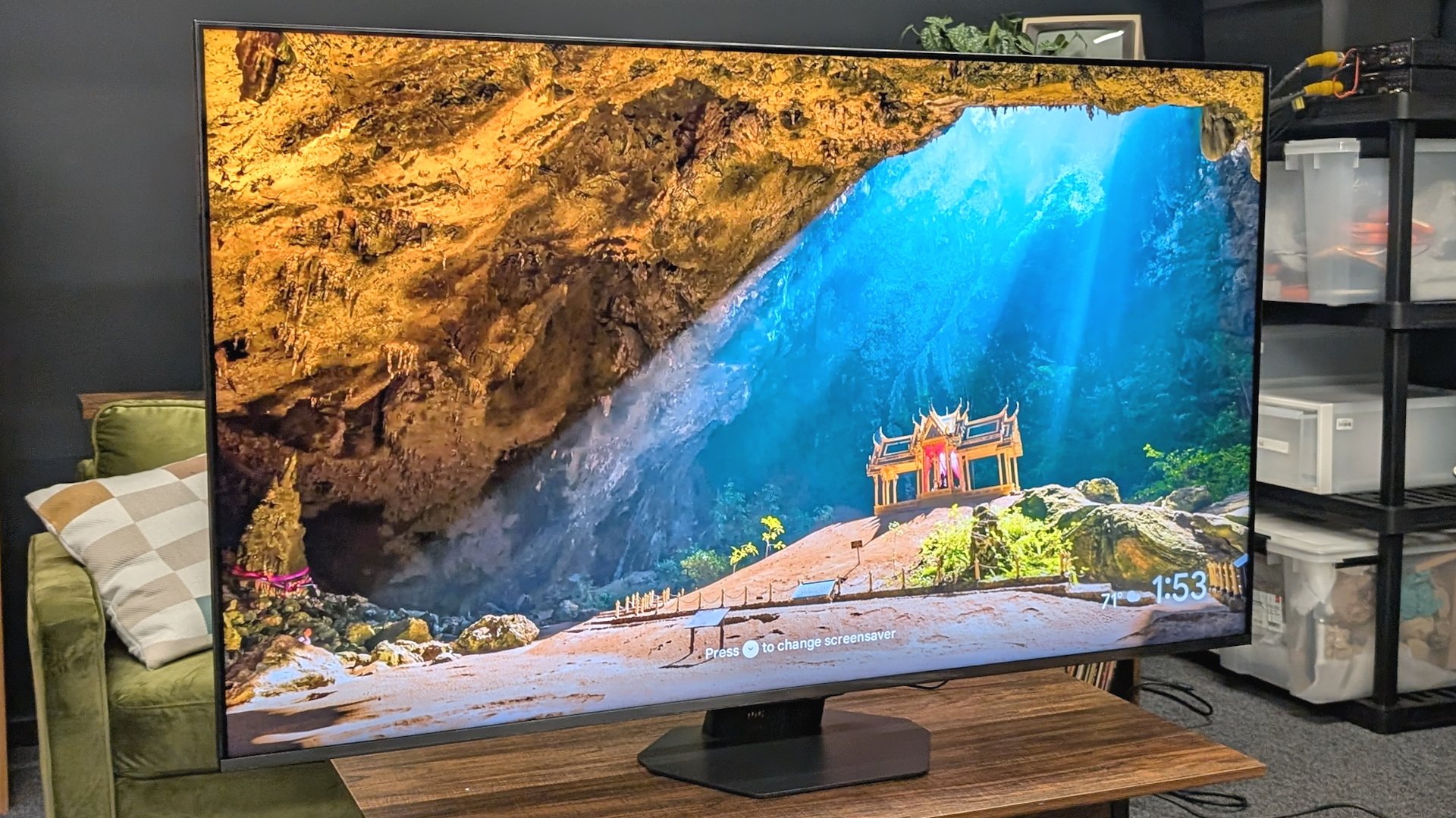
QLED, on the other hand, stands for Quantum Dot Light Emitting Diode. This technology is a bit different. A QLED TV is essentially a very advanced LCD TV. It uses a backlight (a big sheet of LEDs) to shine light through several layers, including a film of “quantum dots.” These tiny particles are what give QLED its incredible brightness and vibrant color.
Think of it like this: a QLED is a master painter with an incredibly bright lamp shining on the canvas. It can produce dazzling, sun-drenched landscapes in a show like Our Planet that feel almost blindingly real, even if your living room is flooded with afternoon light.
The Main Event: OLED vs QLED Which is Better for Your Binge-Watching?
Now that we know our contenders, let’s put them in the ring and see how they fare in the categories that actually matter to a TV lover.
Black Levels & Contrast: The “Game of Thrones” Test
This is where the debate gets heated. Remember “The Long Night,” that infamous episode from Game of Thrones Season 8? People complained they couldn’t see a thing. Well, on an OLED, that episode is a different experience. Because OLED pixels can turn off completely, you get what we call an “infinite contrast ratio.” The black parts of the screen are truly black. This means the fiery breath of a dragon against the pitch-black sky doesn’t have a faint halo or glow around it. It’s sharp, defined, and utterly cinematic.
QLEDs have gotten much, much better at this with technologies like “full-array local dimming,” which creates zones in the backlight that can be dimmed independently. High-end QLEDs do a fantastic job. But they can’t turn off individual pixels. So, in the darkest scenes, you might still see a little bit of light bleed or “blooming,” where bright objects have a slight glow on a dark background.
Winner for Cinema Lovers: OLED. No contest. For pure, unadulterated contrast and blacks that would make a black hole jealous, OLED is the king.
Brightness & Color: The “Ted Lasso” Test
Let’s move out of the dark and into the sunny, optimistic world of Richmond. You’re watching Ted Lasso on a Saturday afternoon, sunlight streaming through the windows. This is where QLED shines—literally.
Because they use a powerful backlight, QLED TVs can get significantly brighter than OLEDs. This brute force brightness helps them combat glare in a bright room and makes colors pop with incredible intensity. That vibrant green of the AFC Richmond pitch looks so lush you’ll want to go run on it. High Dynamic Range (HDR) content, which is designed to show a wider range of light and color, looks spectacular on a top-tier QLED.
OLEDs aren’t dim by any means, and their color is stunningly accurate, but they can’t reach the same peak brightness levels. In a very bright room, the image on an OLED can sometimes look a bit washed out compared to its QLED rival.
Winner for Daytime Viewers: QLED. If your TV room doubles as a sunroom, QLED’s brightness is a game-changer.
|
Our Picks for the Best Television in 2026
As an Amazon Associate, we earn from qualifying purchases.
|
||
| Num | Product | Action |
|---|---|---|
| 1 | Electric Spin Scrubber - Cordless Cleaning Brush with Digital Display, 2 Speeds, 8 Brush Heads, IPX7 Waterproof, Adjustable Long Handle for Bathroom, Tub, Tile, Shower, and Car |

|
Viewing Angles: Who Gets the Bad Seat on Movie Night?
Ever had the whole family over to watch a movie and someone gets stuck on the end of the couch? On some TVs, their view is a washed-out, discolored mess.
This is another area where OLED’s self-emissive technology gives it a huge advantage. Since each pixel generates its own light, the picture looks virtually perfect from almost any angle. Everyone on the couch gets the same brilliant, color-accurate experience.
QLEDs, being based on LCD tech, have traditionally struggled with off-angle viewing. The image quality, color, and contrast can degrade noticeably as you move away from the center. Manufacturers have added special layers to improve this, and high-end models are pretty good, but they still can’t match the near-perfect consistency of an OLED.
Winner for Big Groups: OLED. It’s the most democratic TV technology, ensuring no one is left with a sub-par picture.
According to fictional television critic Dr. Alistair Finch, “Choosing between OLED and QLED isn’t about better or worse; it’s about matching the technology to the content you love. OLED is for the cinematic purist who worships at the altar of shadow and light, while QLED is for the viewer who wants a vibrant, dazzling spectacle that cuts through the daylight.”
Response Time & Gaming: Surviving the Upside Down
For gamers or sports fans, this is crucial. Response time refers to how quickly a pixel can change from one color to another. A slow response time leads to motion blur, where fast-moving objects leave a faint trail behind them.
OLED pixels can change state almost instantaneously. We’re talking fractions of a millisecond. Whether you’re trying to dodge a Demogorgon in a Stranger Things video game or tracking a football on a Hail Mary pass, the motion is incredibly crisp and clear on an OLED.
QLEDs have a slightly slower response time. While high-end models have excellent motion handling and are fantastic for gaming, they can’t physically match the speed of an OLED pixel. For the most competitive gamers, those milliseconds can make a difference.
Winner for Gamers & Sports Fans: OLED. The near-instant response time delivers the smoothest motion possible.
The Big Question: What About Burn-In?
Ah, the ghost that haunts OLED. Burn-in (or more accurately, static image retention) is when a static image—like a news ticker or a video game HUD—is left on the screen for so long that it leaves a permanent shadow.
Here’s the honest truth: for most people, it’s not a real-world problem anymore. Early OLEDs were more susceptible, but modern TVs have a whole suite of features to prevent it, like pixel shifting and screen savers. Unless you plan on leaving CNN on for 8 hours a day, every day, for years, your risk is incredibly low. I’ve had an OLED for years, using it for everything from movies to gaming, and have never seen a hint of it.
QLEDs, because they don’t use organic compounds that degrade over time, are not susceptible to burn-in. This gives them an edge in durability for certain use cases, like being used as a commercial display or a PC monitor with lots of static elements.
Winner for Peace of Mind: QLED. While the risk is low on modern OLEDs, it’s non-existent on QLEDs.
| Feature | OLED (Organic Light Emitting Diode) | QLED (Quantum Dot LED) |
|---|---|---|
| Black Level | Perfect/Infinite | Very good, but not perfect |
| Contrast | Infinite | Excellent, but less than OLED |
| Peak Brightness | Good | Exceptional |
| Color Volume | Excellent | Exceptional |
| Viewing Angle | Near-perfect | Good, but can degrade off-angle |
| Response Time | Near-instant | Very fast, but slower than OLED |
| Burn-In Risk | Low, but possible | None |
| Price | Generally more expensive | Wider range, often more affordable |
Frequently Asked Questions
So for a bright living room, is QLED really better than OLED?
Yes, generally speaking. If you do a lot of your TV watching during the day with the curtains open, a QLED’s superior peak brightness will cut through the ambient light and deliver a more vibrant, punchy image that’s easier to see.
Is OLED worth the extra money just for watching movies?
If you’re a true cinephile who loves to turn the lights down and get lost in a film, absolutely. The perfect black levels and infinite contrast of an OLED provide a level of picture depth and realism that QLEDs can’t quite match. It’s the closest you can get to a commercial cinema experience at home.
What’s the real risk of OLED burn-in in 2024?
For the average user, the risk is extremely low. Modern OLEDs have multiple built-in technologies to mitigate burn-in. You would need to display a static, high-contrast image for hundreds, if not thousands, of hours to cause a permanent issue. For normal viewing of movies, shows, and varied gaming, you shouldn’t worry.
Which is better for gaming, OLED or QLED?
It’s a tough call, but OLED often gets the slight edge. Its near-instantaneous response time results in less motion blur, and the perfect blacks add incredible depth to game worlds. However, high-end QLEDs are also fantastic for gaming, offering brighter HDR highlights and zero risk of burn-in from static game UIs.
Can a QLED TV display pure black?
No, a QLED TV cannot display pure, absolute black in the same way an OLED can. Because it relies on a backlight, there will always be some minuscule amount of light, even in the darkest areas of the screen. High-end models with local dimming get very close, but OLED’s ability to simply turn a pixel off is technologically unique.
The Final Verdict: Your TV, Your Choice
So, after all this, we return to the central question: OLED vs QLED which is better? The answer, as frustrating as it may be, is: it depends entirely on you. There is no single “best” TV technology for everyone. The best TV is the one that fits your room, your budget, and most importantly, your viewing habits.
- Choose OLED if: You’re a movie buff who craves the ultimate cinematic experience in a darker room. You play fast-paced video games, watch a lot of sports, and demand the best possible contrast and motion clarity.
- Choose QLED if: Your TV lives in a bright, sun-filled room. You want the most dazzling, vibrant HDR highlights possible, and you want absolute peace of mind regarding screen burn-in.
Think about the last show you truly loved. Were you mesmerized by the subtle play of shadows in a dark thriller? Or were you captivated by the vibrant, colorful world of an animated series? Your answer to that question might just be the key to choosing your next screen. Now, go on, a world of incredible television awaits. Let me know which one you chose in the comments.