So, you’re standing in the middle of an electronics store, bathed in the glow of a hundred screens, each one brighter and sharper than the last. It’s a sensory overload. Over there, a stunning 4K TV is playing a nature documentary that looks more real than your last vacation. But right next to it, the new 8K model is shimmering, promising a future you can almost touch. The big question hangs in the air, a neon sign in your mind: what’s the right choice in this 4k Vs 8k Tv Buying Guide? Is it worth shelling out the extra cash for 8K, or is 4K the reigning king for a reason? Let’s be real—this isn’t just about buying a new screen; it’s about choosing the portal through which you’ll experience the next era of television. And as your guide from Televisionado, I’m here to cut through the marketing noise and help you make a decision you’ll love for years to come.
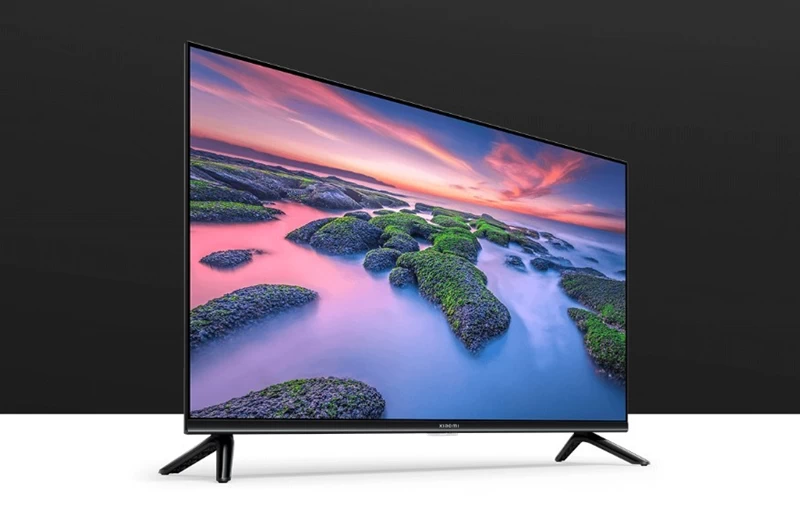
What’s the Real Difference Between 4K and 8K?
At its core, the difference between 4K and 8K is all about pixels—the tiny little dots that make up the image on your screen. A 4K TV has a resolution of 3840 x 2160 pixels, which adds up to about 8.3 million pixels in total. An 8K TV quadruples that, boasting a staggering resolution of 7680 x 4320, or around 33 million pixels.
The Pixel Story: A Numbers Game
Imagine the TV screen is a giant mosaic. A 4K TV gives you an 8.3-million-tile mosaic. It’s incredibly detailed, allowing you to see the intricate stitching on a costume in The Crown or the individual hairs on a Wookiee in The Mandalorian. An 8K TV, on the other hand, gives you a 33-million-tile mosaic for the same size picture. In theory, this means the image is so dense with detail that you can’t distinguish the individual pixels, creating a picture that feels almost like looking through a window.
Does More Pixels Always Mean a Better Picture?
Here’s the kicker: not necessarily. While 33 million pixels sounds leagues better than 8.3 million, the human eye has its limits. The ability to perceive that extra detail is heavily dependent on two things: the size of your TV and how far away you’re sitting from it. We’ll dive deeper into that in a bit, but for now, just know that more pixels don’t automatically guarantee a mind-blowing upgrade you’ll notice from your couch.
The Content Conundrum: Can You Even Watch Anything in 8K?
This is the elephant in the room for any 4K vs 8K TV buying guide. You can own the most advanced television on the planet, but if there’s nothing to watch on it in its native resolution, what’s the point?
Right now, the world is swimming in 4K content.
- Streaming Services: Netflix, Disney+, Amazon Prime Video, and HBO Max all offer extensive libraries of 4K HDR movies and original series. Watching Breaking Bad in its 4K remaster is like seeing it for the first time; the stark New Mexico landscapes feel vast and cinematic.
- Physical Media: 4K Ultra HD Blu-ray discs offer the absolute best, uncompressed picture and sound quality available to consumers.
- Gaming: The PlayStation 5 and Xbox Series X are built for 4K gaming, delivering stunningly realistic and smooth gameplay.
8K content, however, is a different story. It’s incredibly scarce. YouTube has some 8K videos, mostly tech demos and nature footage. A few streaming services in Japan have experimented with 8K broadcasting for events like the Olympics. But for mainstream movies and TV shows, native 8K content is practically nonexistent. Your brand-new 8K TV will spend 99.9% of its time playing 4K, 1080p, or even lower-resolution content.
|
Our Picks for the Best Television in 2026
As an Amazon Associate, we earn from qualifying purchases.
|
||
| Num | Product | Action |
|---|---|---|
| 1 | Electric Spin Scrubber - Cordless Cleaning Brush with Digital Display, 2 Speeds, 8 Brush Heads, IPX7 Waterproof, Adjustable Long Handle for Bathroom, Tub, Tile, Shower, and Car |

|
Let’s Talk Screen Size and Viewing Distance
This is where the theoretical advantage of 8K often crumbles in the real world. To actually see the benefit of all those extra pixels, you either need a colossal screen or you need to sit uncomfortably close to it.
| Screen Size | Recommended 4K Viewing Distance | Recommended 8K Viewing Distance (to see the difference) |
|---|---|---|
| 55-inch | 4.5 – 7 feet (1.4 – 2.1 m) | 2 – 3.5 feet (0.6 – 1.1 m) |
| 65-inch | 5.5 – 8 feet (1.7 – 2.4 m) | 2.5 – 4 feet (0.8 – 1.2 m) |
| 75-inch | 6 – 9.5 feet (1.8 – 2.9 m) | 3 – 5 feet (0.9 – 1.5 m) |
| 85-inch | 7 – 10.5 feet (2.1 – 3.2 m) | 3.5 – 5.5 feet (1.1 – 1.7 m) |
As you can see, for a typical 65-inch TV in a normal living room, you’d have to sit about 4 feet away to begin perceiving the extra detail of 8K. Most people sit much farther back. From 8 feet away, a 4K and an 8K TV showing the same 4K source material will look virtually identical to most people.
“The pursuit of resolution is a classic case of diminishing returns. The leap from standard definition to HD was monumental. From HD to 4K was significant. But from 4K to 8K, for the vast majority of users and screen sizes, the perceptible difference is minimal at best.” – Dr. Alistair Finch, Media Technology Analyst
The Upscaling Argument: Is 8K’s Secret Weapon a Game-Changer?
Since there’s no native 8K content, 8K TVs rely heavily on upscaling. This is where the TV’s processor uses sophisticated AI algorithms to take a lower-resolution source (like a 4K movie) and intelligently “fill in the blanks” to display it on the 8K screen.
High-end 8K TVs from brands like Samsung, LG, and Sony have incredibly powerful processors. Their upscaling can indeed make a 4K image look sharper, cleaner, and more detailed on an 8K panel than it might on a native 4K TV. The AI can be brilliant at enhancing textures and smoothing edges. However, the quality of this upscaling varies by brand, and it’s not magic. It’s an educated guess by a computer, and sometimes it can look artificial. Conversely, the best 4K TVs have phenomenal processors dedicated to making 4K content look its absolute best without any upscaling trickery.
The Big Question: Is an 8K TV Worth It Right Now?
For over 95% of people, the answer is a clear no. A high-quality 4K OLED or QLED TV will provide a more impactful and satisfying viewing experience for significantly less money. The improvements you get from superior contrast, deeper blacks, and vibrant HDR colors on a top-tier 4K set will be far more noticeable than the extra pixels of a mid-range 8K TV.
Think of it this way: a truly breathtaking TV experience, the kind that makes you gasp during the “Battle of the Bastards” in Game of Thrones, is a combination of factors:
- Resolution: 4K is the sweet spot.
- Contrast Ratio: This is king. The difference between perfect black and bright white is what makes an image pop. This is where OLED technology shines.
- Color Gamut & HDR: The ability to display a wide range of realistic colors and bright highlights is what brings a scene to life.
- Motion Handling: How well the TV handles fast action without blurring is crucial for sports and gaming.
A premium 4K TV excels in all these areas. An 8K TV puts most of its budget into the pixel count, sometimes at the expense of these other, more important picture quality elements.
The Future-Proofing Fallacy: A Televisionado’s Take
Many people buy 8K with the idea of “future-proofing.” It’s a tempting logic, but I believe it’s flawed in the TV world. Technology moves too fast. By the time 8K content becomes even remotely mainstream—which could be 5, 7, or even 10 years away—the 8K TVs on the market then will be vastly superior and significantly cheaper than the models available today. They’ll have better processors, more advanced display technologies (like MicroLED), and more mature features. Buying an 8K TV in 2024 is like buying the first-generation iPhone in 2007 for a premium price, just as 3G networks were a distant dream. You’re paying a massive premium for a feature you can’t use yet, and you’ll miss out on a decade of other innovations.
So, Who Should Even Consider an 8K TV?
- The Ultra-Early Adopter: If you have a limitless budget and must have the absolute latest technology, regardless of practical value, then go for it.
- The Giant Screen Enthusiast: If you are buying a TV that is 85 inches or larger and plan to sit relatively close, you might begin to appreciate the increased pixel density.
- The Hardcore PC Gamer with a Top-Tier GPU: A very small number of high-end gaming PCs can push games at 8K resolution, and for them, an 8K display could be a legitimate (though extremely expensive) choice.
Frequently Asked Questions
1. Is 8K better than 4K for gaming?
For now, 4K is much better for gaming. Consoles like the PS5 and Xbox Series X are designed to run games beautifully at 4K, often at 60 or 120 frames per second. Trying to run games at 8K requires immense processing power that even the best consoles don’t have, leading to a huge drop in performance. Stick with a 4K TV with a 120Hz refresh rate and HDMI 2.1 for the best gaming experience.
2. Will my 1080p Blu-rays and cable TV look better on an 8K TV?
They might look slightly sharper due to the 8K TV’s advanced upscaling processor, but it can be a mixed bag. Stretching a lower-resolution image across 33 million pixels can also highlight its flaws and imperfections. A high-quality 4K TV will often do a more natural-looking job of upscaling 1080p content.
3. Do I need a special HDMI cable for an 8K TV?
Yes. To get a true 8K signal to your TV (for example, from a future 8K-capable device), you need an Ultra High-Speed HDMI 2.1 cable. These cables have the necessary bandwidth (48Gbps) to carry the massive amount of data required for an 8K signal.
4. When will 8K movies and TV shows be common?
It’s very hard to say, but it’s not on the immediate horizon. The production pipeline—from cameras to editing suites to distribution platforms—is still firmly built around a 4K workflow. Most industry experts predict it will be many years before 8K content becomes widespread.
5. What is the most important factor to consider in this 4K vs 8K TV buying guide?
The most important factor is overall picture quality, not just resolution. For the same price as an entry-level 8K TV, you can get a top-of-the-line 4K OLED TV that will offer a far superior viewing experience in every measurable way, from contrast and black levels to color accuracy and HDR performance.
The Final Verdict
In the great 4K vs 8K TV buying guide debate, the conclusion is overwhelmingly clear: 4K is the smart, practical, and superior choice for nearly everyone right now. It delivers a stunning picture, has a universe of content available, and offers incredible value for your money. Don’t get caught up in the pixel race. Instead, invest your budget in a premium 4K TV with fantastic HDR performance and a great contrast ratio. That’s where the real magic of modern television lies. Your eyes—and your wallet—will thank you.
Now, I turn it over to you. Are you team 4K, or are you betting on the 8K future? I’d love to hear what you think in the comments below. Let’s talk TV.